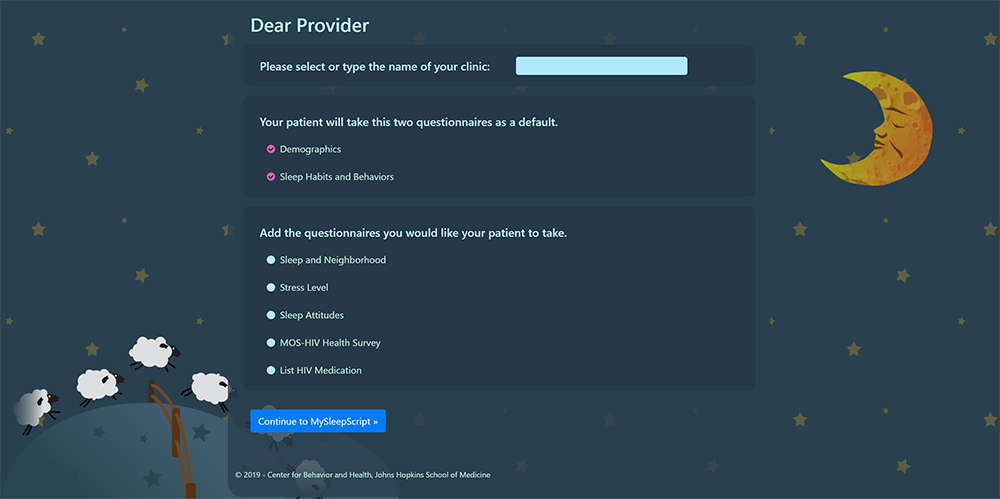
A healthcare education platform translating sleep medicine knowledge into calm, accessible, and actionable digital experiences.
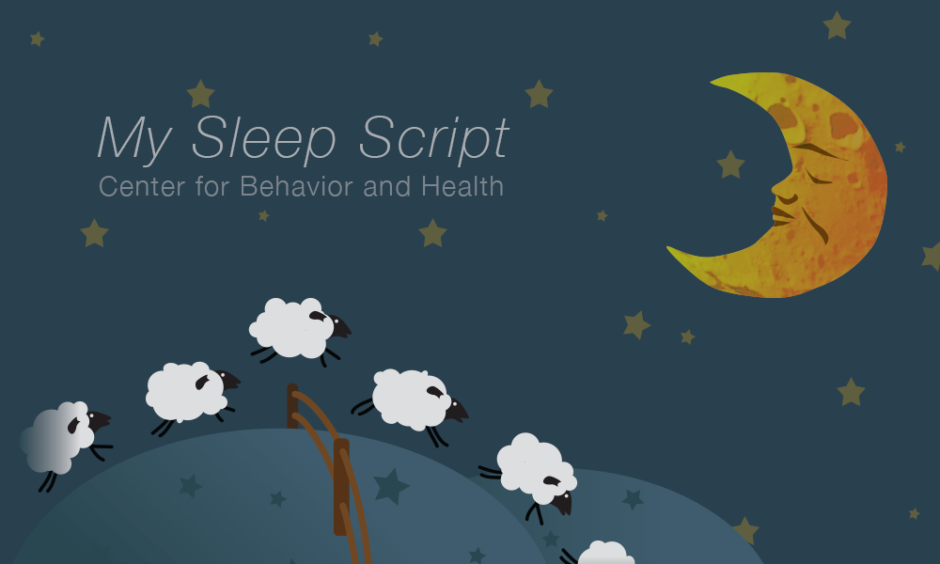
• Date: Dec 2019 – Apr 2020
• Principal Investigators:
Rachel Salas, MD; Charlene E. Gamaldo, MD
• Institution:
Johns Hopkins Center for Behavior and Health
• Role: UX/UI Developer / Visual Designer
Sleep disorders are widespread, yet access to clear and approachable sleep education remains limited for both patients and non-specialist healthcare providers. My Sleep Script was developed to bridge this gap by translating core sleep medicine knowledge into a user-friendly digital platform that supports understanding, communication, and care.
This project focused on expanding an existing mobile application into a web-based experience, improving usability, accessibility, and reach while maintaining a tone that is calming, non-clinical, and approachable for diverse users.
The Design Question
How can complex medical information about sleep health be presented in a way that feels calm, accessible, and trustworthy—supporting both patient understanding and clinical use without increasing cognitive or emotional burden?
Design Approach
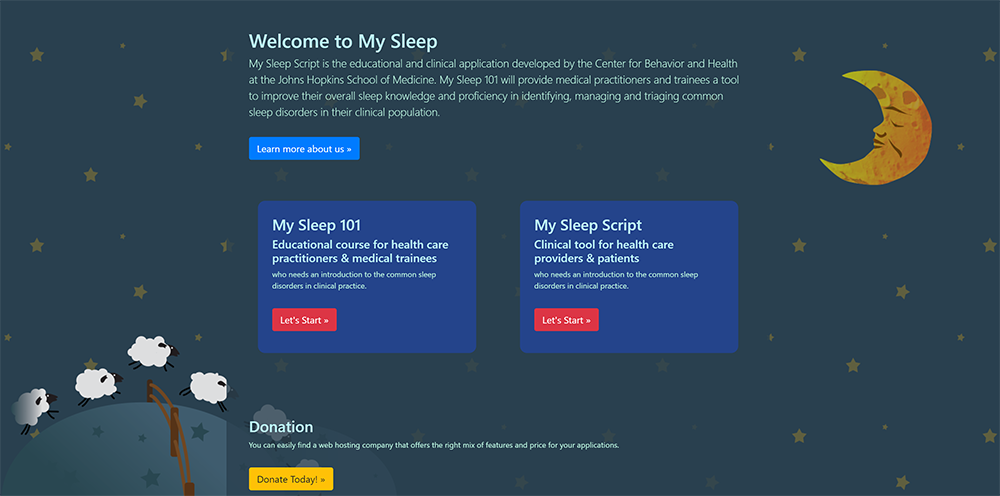
Sleep health education requires more than accuracy; it requires tone, pacing, and emotional sensitivity. The design approach prioritized clarity and reassurance over density, using visual language and interaction patterns to reduce anxiety and support comprehension.
Key considerations included:
-
Designing a visual system that conveys calm and safety
-
Supporting both patient-facing and provider-facing use cases
-
Reducing cognitive load while maintaining medical credibility
-
Ensuring accessibility for users with varying levels of health literacy
Process & Decisions
-
Developed a night-themed visual language to reinforce calm and continuity
-
Structured content into clear, digestible sections to support guided learning
-
Designed interfaces that emphasize readability, contrast, and hierarchy
-
Translated mobile interaction patterns into a responsive web experience
-
Balanced illustrative elements with clinical clarity to avoid infantilization
The interface was treated as an active participant in care—supporting understanding, trust, and engagement rather than simply delivering information.
Outcome & Reflection
My Sleep Script demonstrates how user experience design can support healthcare delivery by shaping how information is encountered emotionally as well as cognitively. By aligning visual tone, interaction pacing, and content structure, the platform helps reduce friction between medical expertise and everyday understanding.
This project continues to inform my approach to teaching and practice, reinforcing the idea that design decisions carry ethical responsibility—particularly in healthcare contexts where clarity, empathy, and accessibility directly affect outcomes.