High-Fidelity Spatial Modeling for Intelligent Environments
Overview
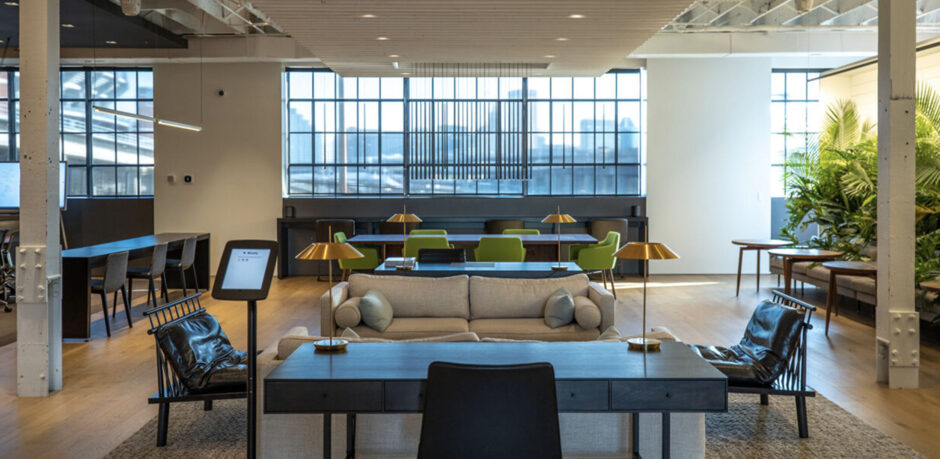
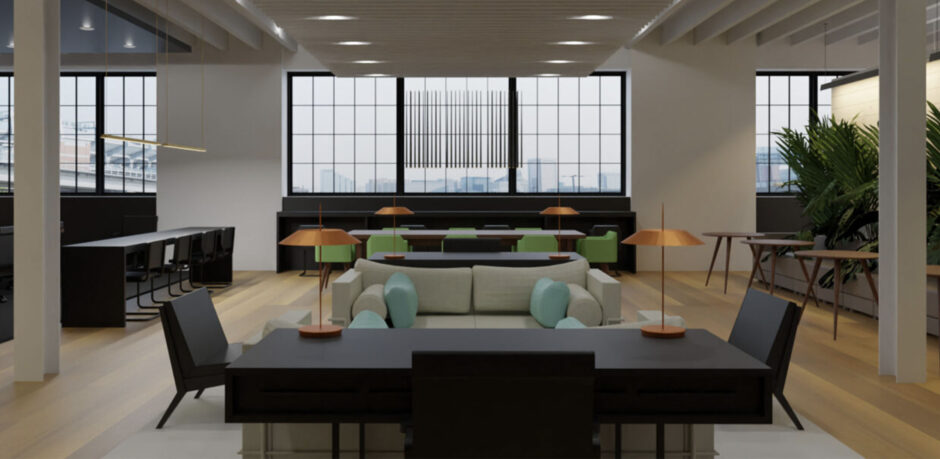
This project focuses on building a high-fidelity digital twin of a physical workspace, designed to accurately represent materials, lighting behavior, and spatial relationships at production quality.
Rather than treating the digital twin as a static visualization, the goal was to establish a realistic spatial foundation that could later support simulation, data overlays, and automation logic.
Project Details
-
Date: 12/01/2022 – 02/01/2023
-
Platform: Elevated
-
Role: Project Lead · Product Designer · 3D Modeling · Lighting · Texturing
-
AutoCAD Revit, Blender 3D, Photoshop, Unity
Design Intent
The primary intent of this work was to bridge the gap between:
-
Architectural design documentation
-
Real-world spatial experience
-
Future system-driven interactions
By closely matching physical materials, lighting conditions, and environmental context, the digital twin enables stakeholders to reason about space before, during, and after deployment.
Lighting & Environmental Fidelity
A major focus of this project was lighting accuracy.
I collaborated with architectural and lighting engineers to:
-
Model over 200 individual lighting fixtures
-
Recreate real-world color temperature, intensity, and distribution
-
Simulate circadian lighting behavior across different times of day
Lighting parameters were designed to dynamically adjust based on system requirements and user experience goals—laying the groundwork for later integration with live control systems.
Material & Spatial Accuracy
To ensure realism and usability:
-
Materials were custom-built to reflect real-world textures and finishes
-
Scale, proportions, and sightlines were carefully matched to the physical space
-
Furniture, architectural elements, and circulation paths were modeled to support both visual realism and functional analysis
This allowed the digital twin to function as both a design artifact and a decision-making tool.
Pipeline & Tools
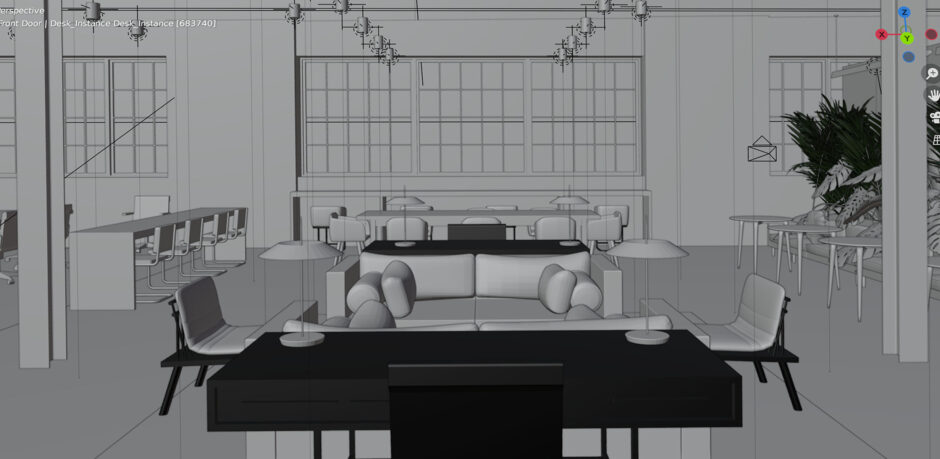
The digital twin was produced using a multi-tool pipeline optimized for flexibility and future expansion:
-
AutoCAD Revit – architectural reference and spatial accuracy
-
Blender 3D – modeling, lighting, and rendering
-
Photoshop – texture creation and refinement
-
Unity – real-time rendering and future interactive potential
This pipeline was intentionally selected to support later extensions into real-time data, simulation, and XR environments.
Role & Responsibilities
-
Project Lead
-
Product Designer
-
3D Modeling & Lighting
-
Texture & Material Development
-
Cross-disciplinary collaboration with architecture and engineering teams
I led this effort end-to-end, balancing visual fidelity with system readiness.
Why This Matters
This work represents the visual and spatial foundation of a broader digital twin ecosystem.
By achieving high fidelity at the rendering level, the platform is able to:
-
Support realistic simulation
-
Enable trustworthy data visualization overlays
-
Serve as a base for automation, analytics, and XR experiences
This project marks the transition from visual representation to spatial intelligence.