Reservation Friction Framework
R-24: Forgotten Reservation Friction
Hybrid work introduced flexibility—but it also broke continuity. Plans change, memory fades, and urgency often overrides intention.
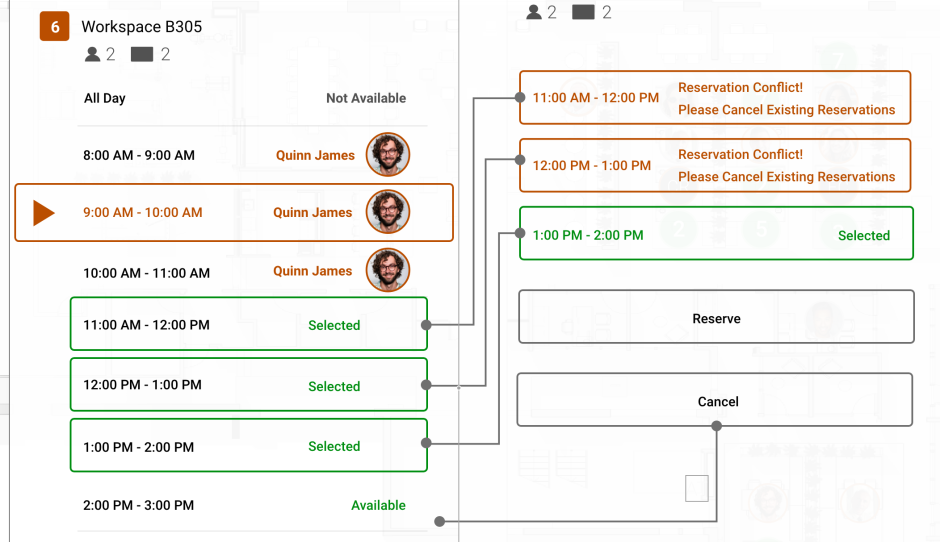
R-24 friction describes a specific and recurring breakdown in hybrid space systems: when a user has an existing reservation within a short time horizon (typically within 24 hours), forgets it, and attempts to make a new reservation for an immediate need—only to be blocked by the system.
This is not user error. It is a predictable behavioral pattern.
Friction Definition
R-24: Forgotten Reservation Friction
A short-horizon reservation conflict where:
A user already holds a valid reservation
The reservation is forgotten or no longer top-of-mind
The user needs space immediately
The system blocks the action due to duplicate reservation rules
The system is correct.
The experience feels broken.
Context: Why R-24 Happens in Hybrid Environments
Hybrid users do not operate with stable routines.
They book ahead, revise plans, shift locations, and decide late.
Common conditions that produce R-24 friction:
Reservations made days in advance
Gaps between planning and arrival
Mobile-first, on-the-go decision making
Cognitive overload from flexible schedules
From the user’s perspective, the system responds at the worst possible moment—when clarity is needed most.
UX Problem Statement
How might we support immediate space needs without breaking fair-use rules, while helping users recover from forgotten intent instead of punishing them for it?
This is not a scheduling problem.
It is a memory + timing + intent mismatch.
System Constraints
The booking system intentionally enforces:
One user per space per time slot
No duplicate reservations in overlapping windows
These rules protect:
Fair access
Behavioral integrity
Clean utilization data
Removing the rules was not an option.
Redesigning how the rules surfaced was.
Root Cause Analysis
The friction did not come from enforcement.
It came from enforcement without context.
Key insights:
Users think in terms of “now,” not calendar state
Forgetting a reservation is normal, not negligent
Blocking an action during urgency feels like system failure
Error states erode trust—even when logic is correct
The system assumed perfect recall.
The users did not have it.
Design Principle
Resolve conflict at the moment of intent.
Users should not be forced to:
Leave the booking flow
Search for past decisions
Undo actions they no longer remember
Restart the process
The system should absorb the mismatch—not the user.
UX Response Pattern: Inline Conflict Resolution
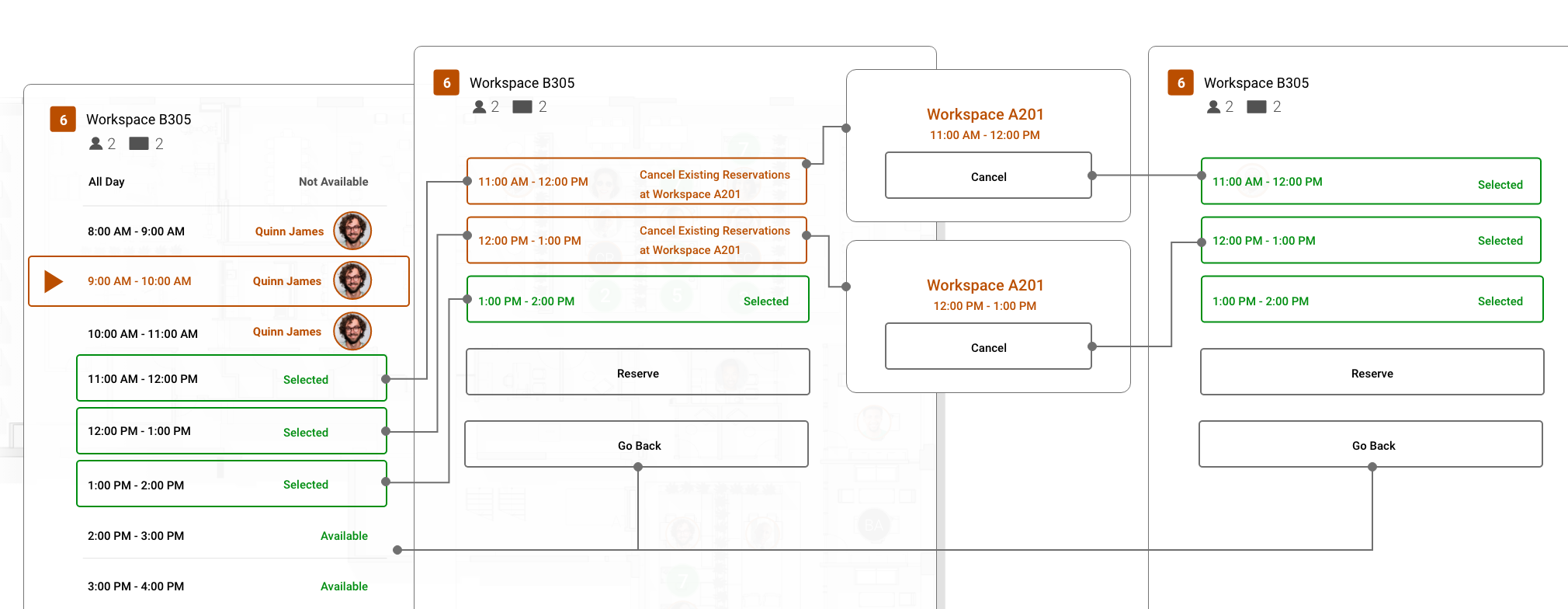
When a user attempts to book a space that conflicts with an existing reservation, the system now:
Clearly surfaces the existing reservation
Explains why the new booking cannot proceed
Offers direct cancellation of the existing reservation
Continues the new booking seamlessly
There are no dead ends.
No silent failures.
No hidden rules.
Why This Works
Respects Immediate Intent
The system acknowledges the user’s present need instead of prioritizing past intent.
Reduces Cognitive Load
Users are not required to remember what the system already knows.
Preserves System Integrity
Rules remain intact. Data remains clean. Fairness is maintained.
The experience becomes forgiving without becoming permissive.
Outcomes
Addressing R-24 friction resulted in:
-
Reduced booking abandonment
-
Lower frustration during peak usage moments
-
Increased trust in system behavior
-
Normalized correction without shame or friction
Users felt supported rather than blocked.
Why R-24 Matters as a Pattern
R-24 friction is subtle, but dangerous.
If ignored:
-
Users blame the system
-
Workarounds emerge
-
Trust erodes
-
Data quality degrades over time
If addressed:
-
Systems feel intelligent rather than rigid
-
Rules feel helpful instead of punitive
-
Behavior aligns naturally with intent
This is not a feature decision.
It is a system behavior decision.
Framework Placement
R-24 is one state within a broader Reservation Friction Framework, alongside:
-
R-0 (Walk-In Friction)
-
R-72 (Long-Horizon Drift)
-
R-N (Normal Flow)
Healthy systems do not assume R-N.
They design for recovery from R-24.
Closing Reflection
Good experience systems do not eliminate friction.
They recognize it, classify it, and respond with care.
R-24 friction taught us that hybrid work requires systems that forgive human forgetfulness—while still protecting collective fairness.
Designing for recovery is not a compromise.
It is a mark of maturity.